WorkAboutBlogContactLet's talk

WorkBASIC Home LoanBASIC Website 2.0

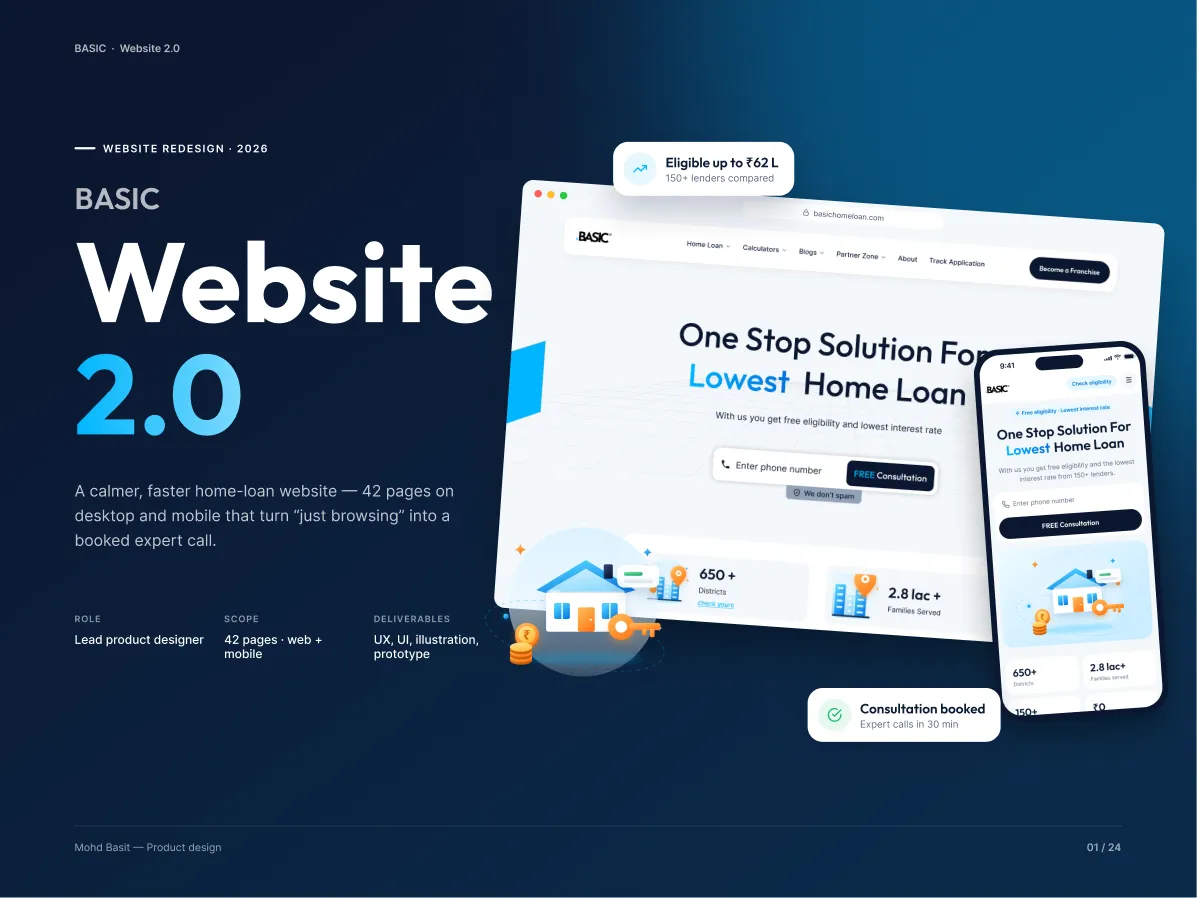
BASIC Website 2.0

A calmer, faster home-loan website — 42 pages on desktop and mobile that turn “just browsing” into a booked expert call.
Client
BASIC Home Loan
Role
Lead product designer
Year
2025
Platform
Web
Type
Fintech, Websites
Frames
24
BASIC Website 2.0 cover

Overview

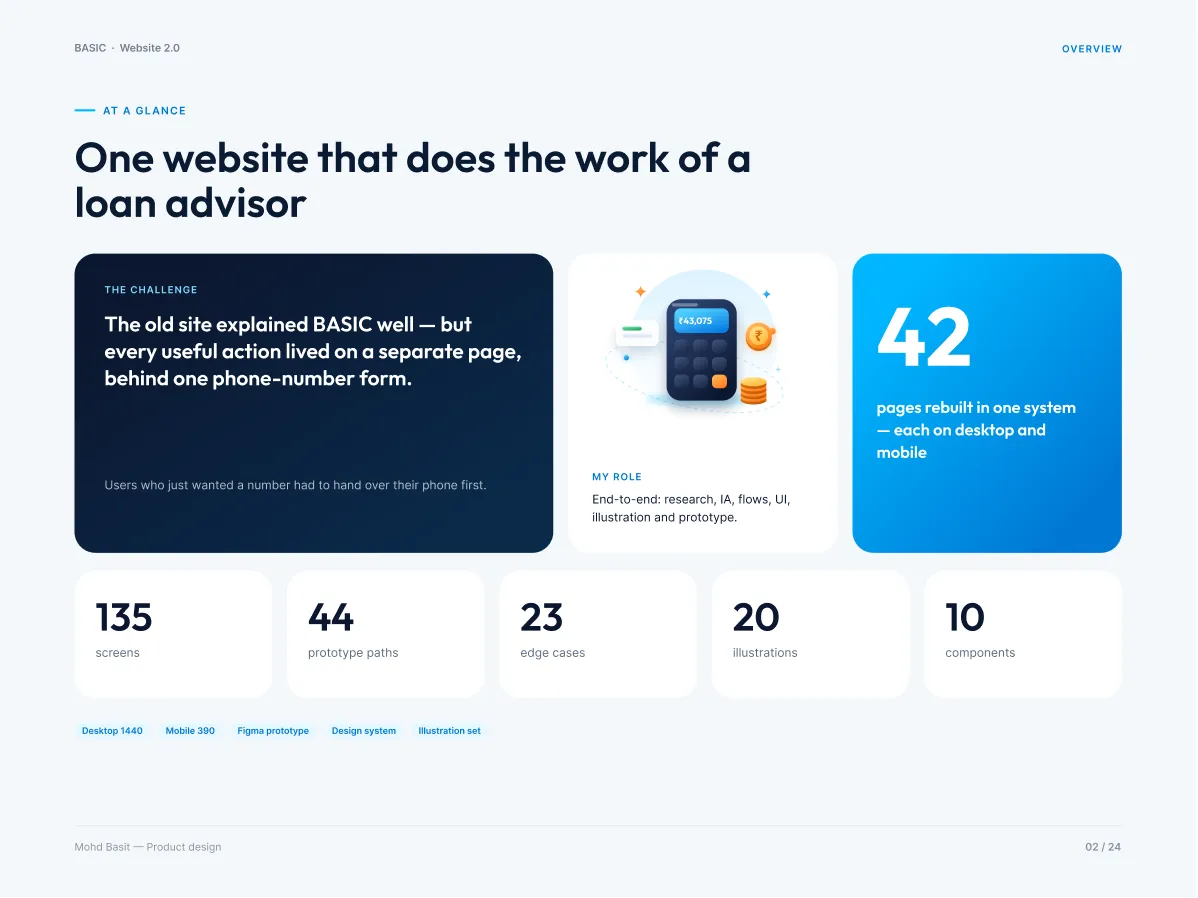
One website that does the work of a loan advisor

The old site explained BASIC well — but every useful action lived on a separate page, behind one phone-number form.

42pages rebuilt in one system — each on desktop and mobile
135screens
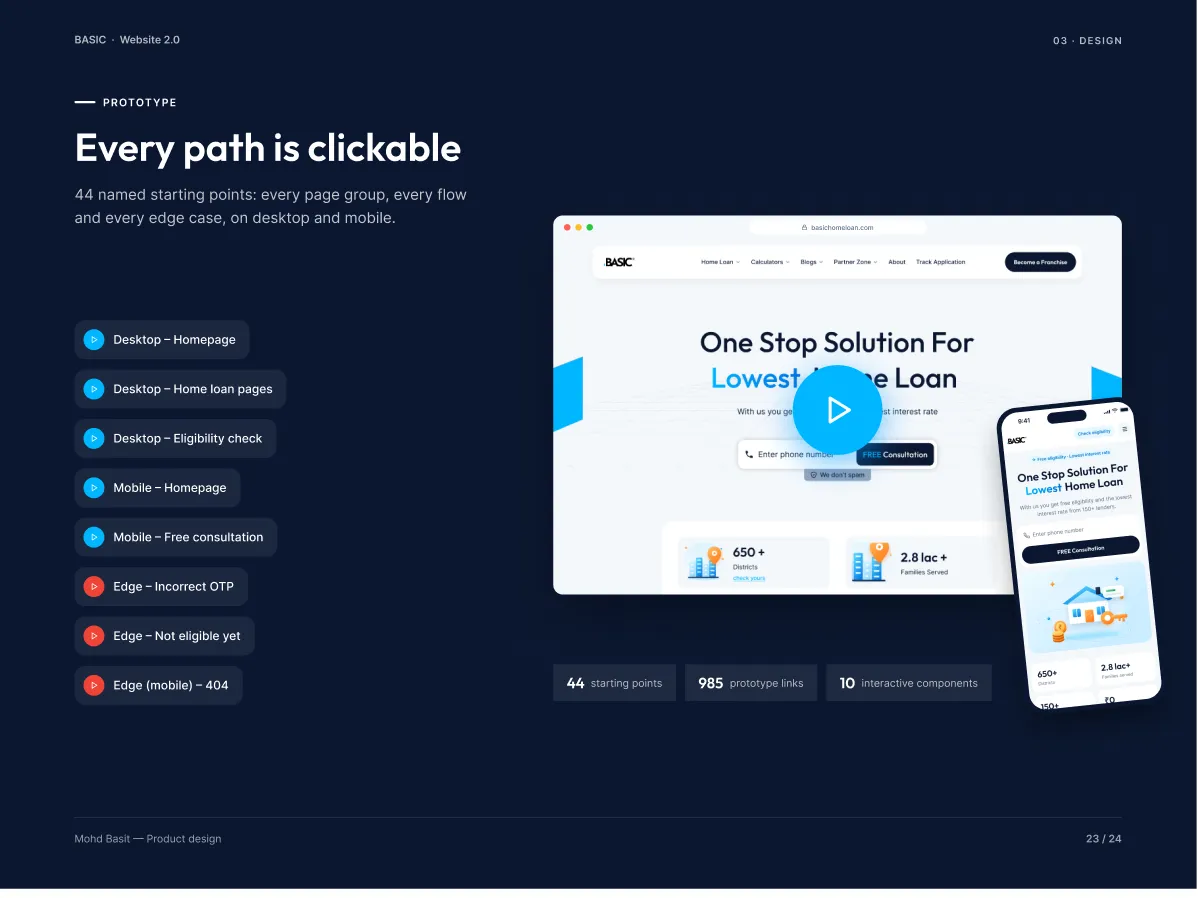
44prototype paths
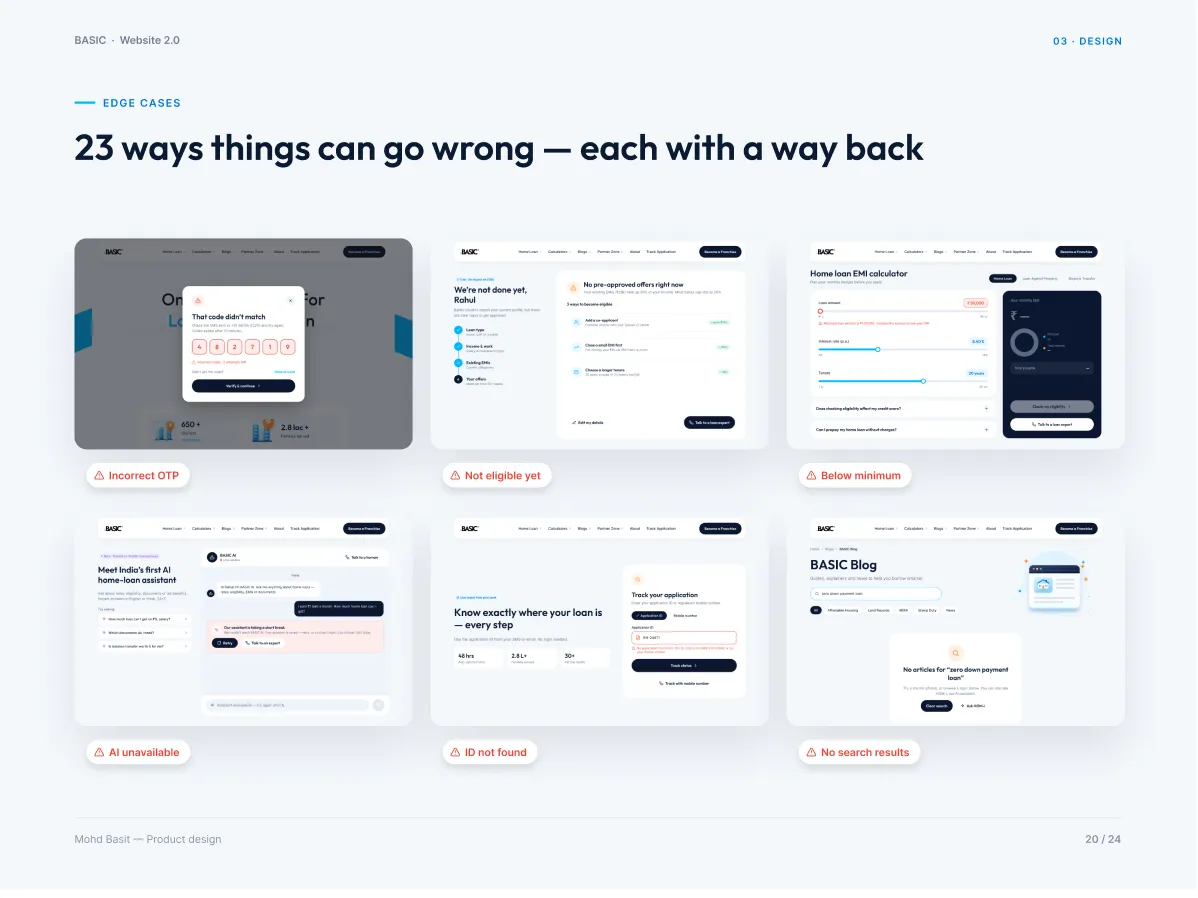
23edge cases
  • My roleEnd-to-end: research, IA, flows, UI, illustration and prototype.

The case study

24 frames from the Figma file
02 At a glance
BASIC Website 2.0: At a glance
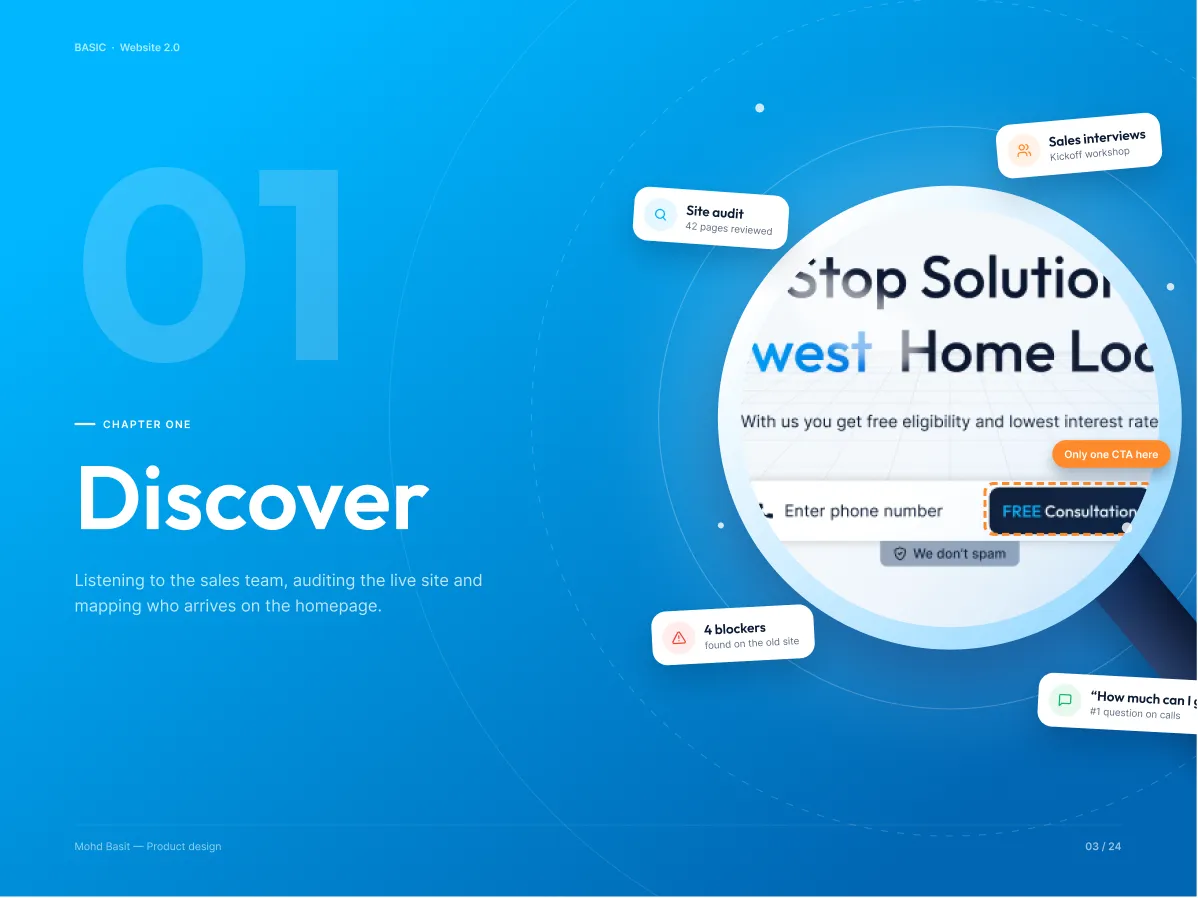
03 Chapter — Discover
BASIC Website 2.0: Chapter — Discover
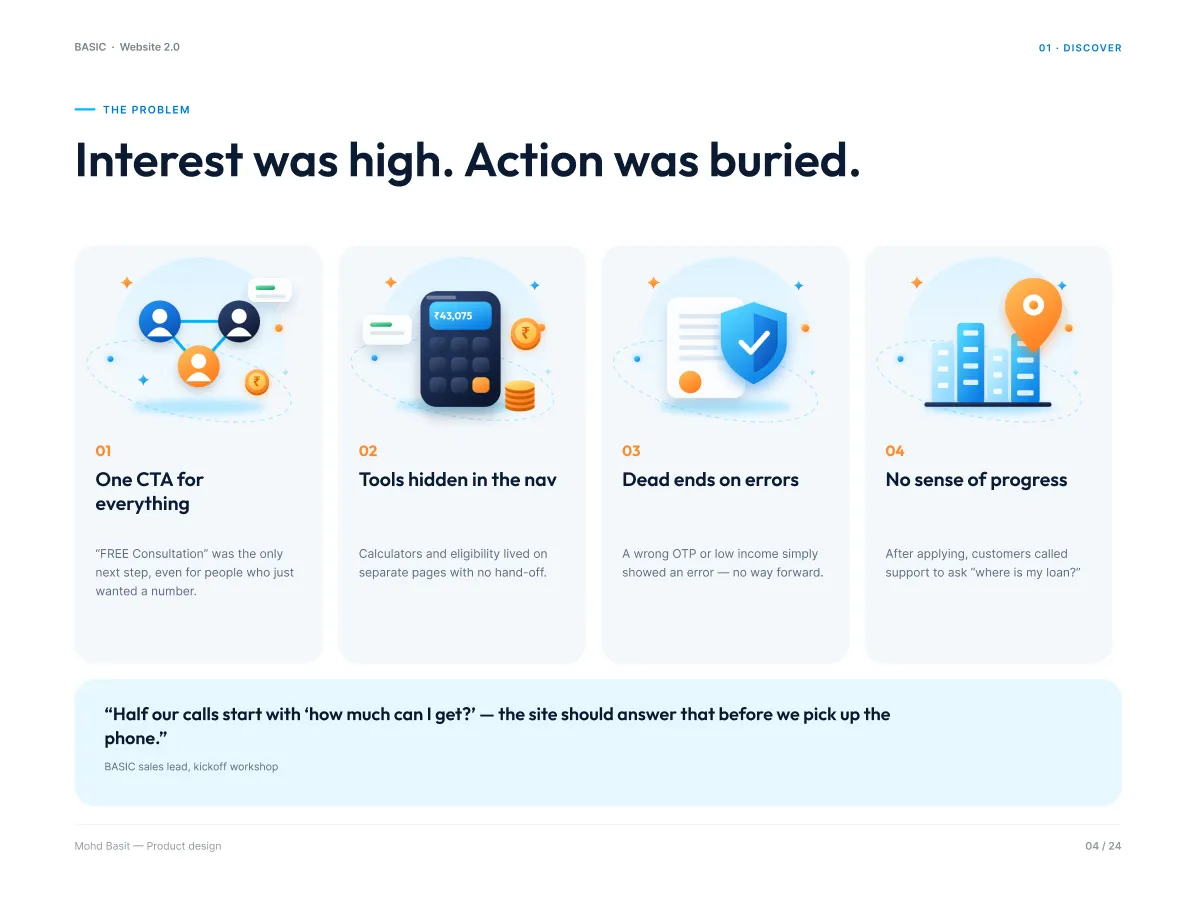
04 The problem
BASIC Website 2.0: The problem
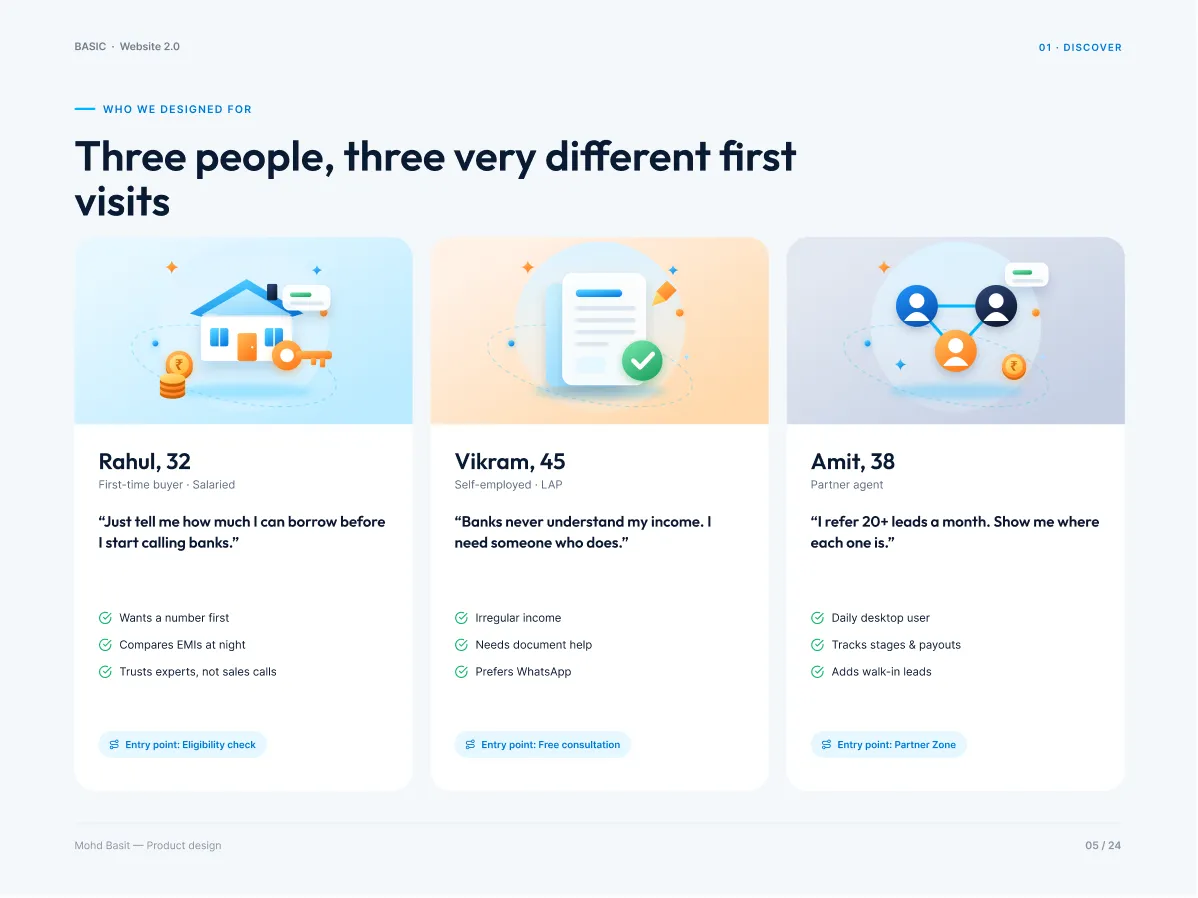
05 Who we designed for
BASIC Website 2.0: Who we designed for
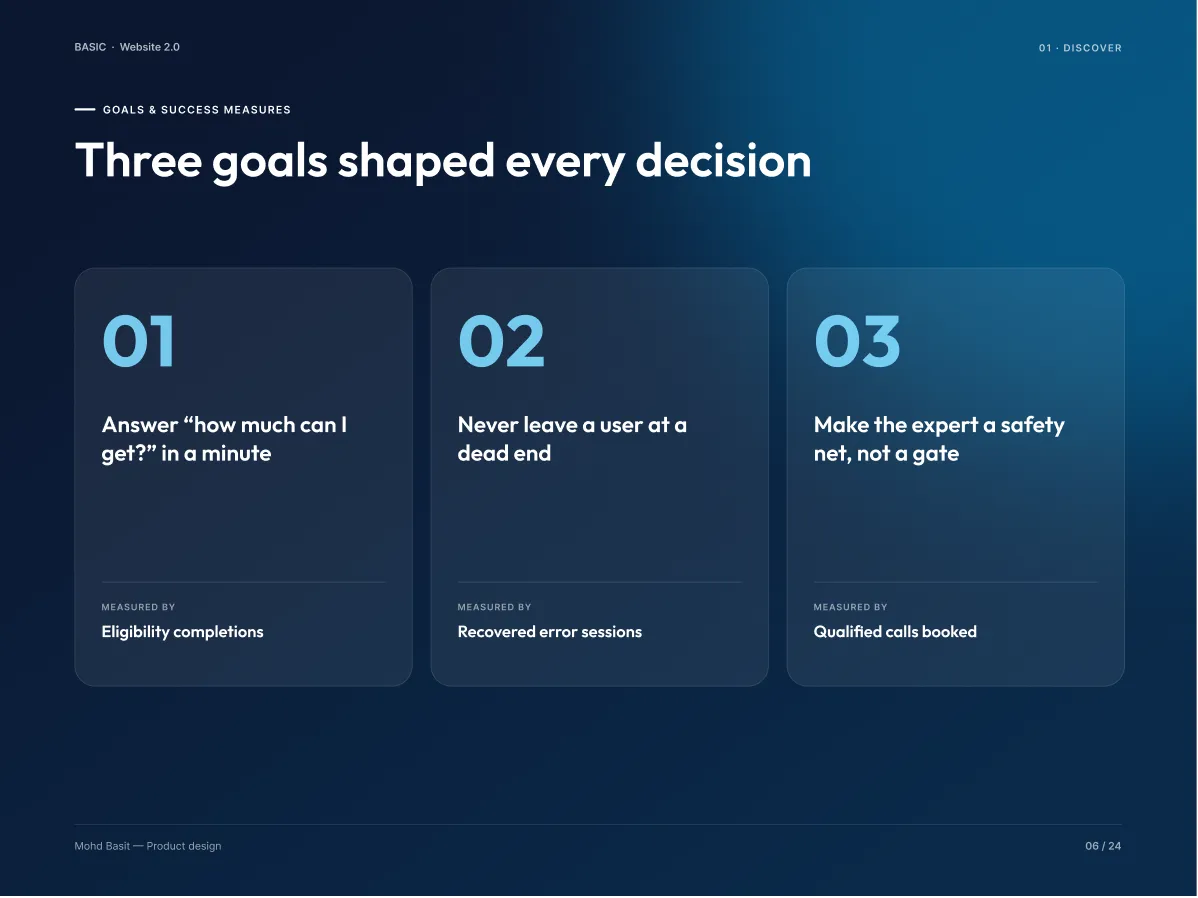
06 Goals
BASIC Website 2.0: Goals
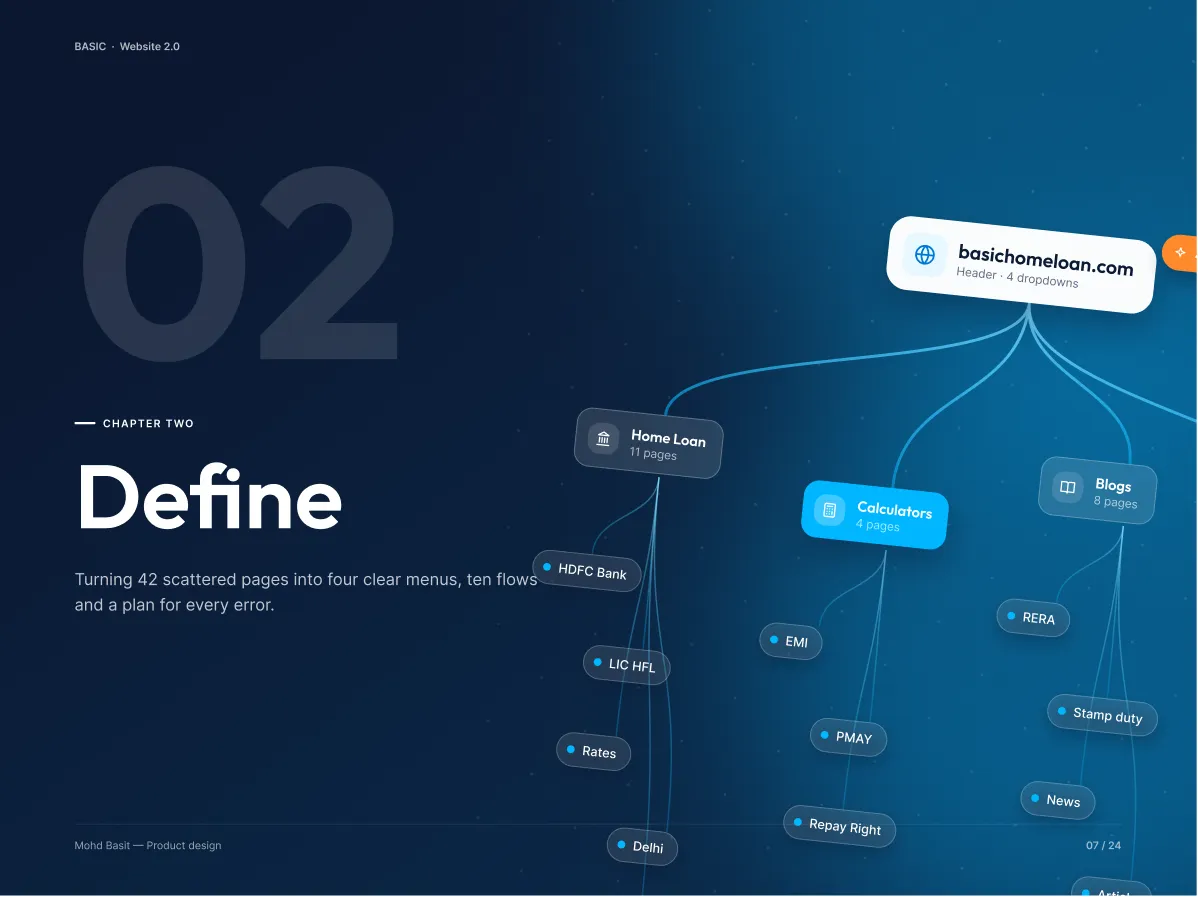
07 Chapter — Define
BASIC Website 2.0: Chapter — Define
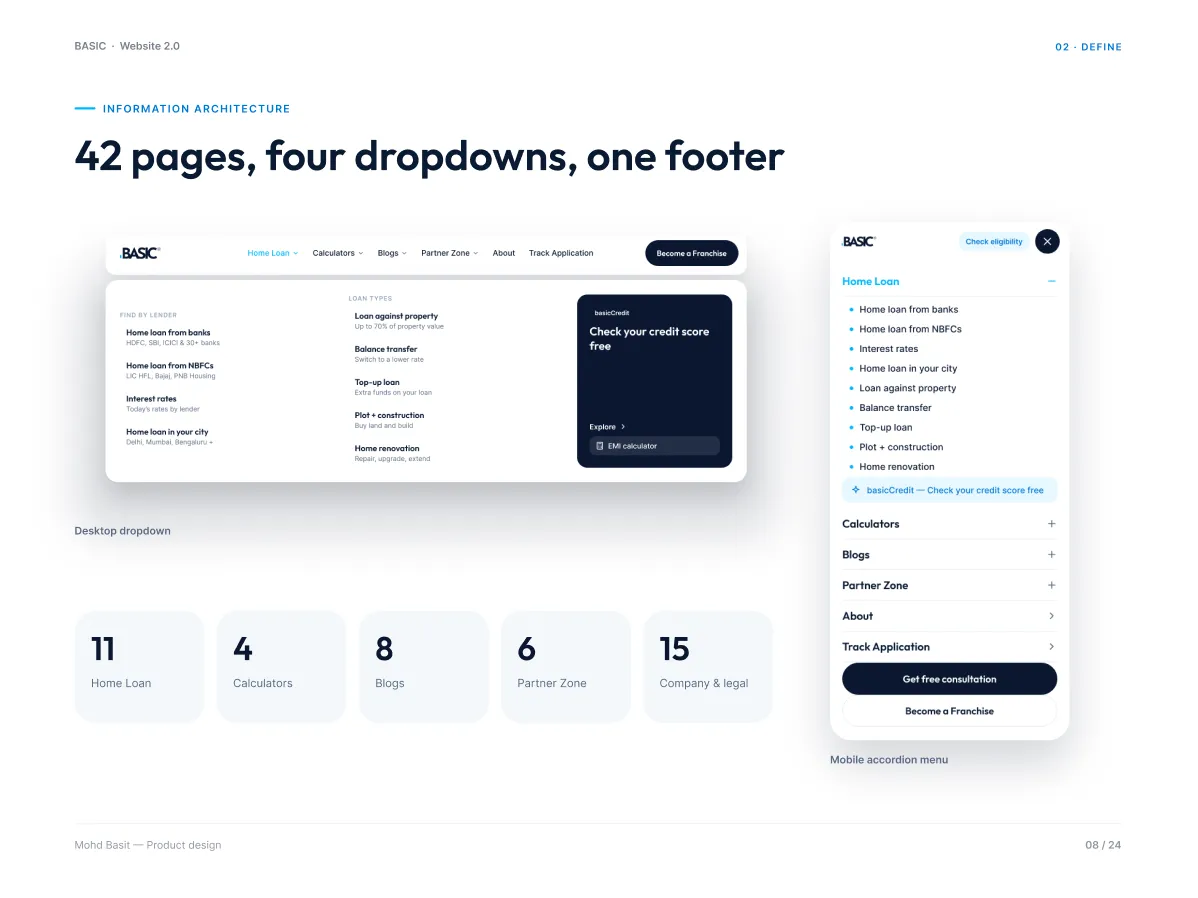
08 Information architecture
BASIC Website 2.0: Information architecture
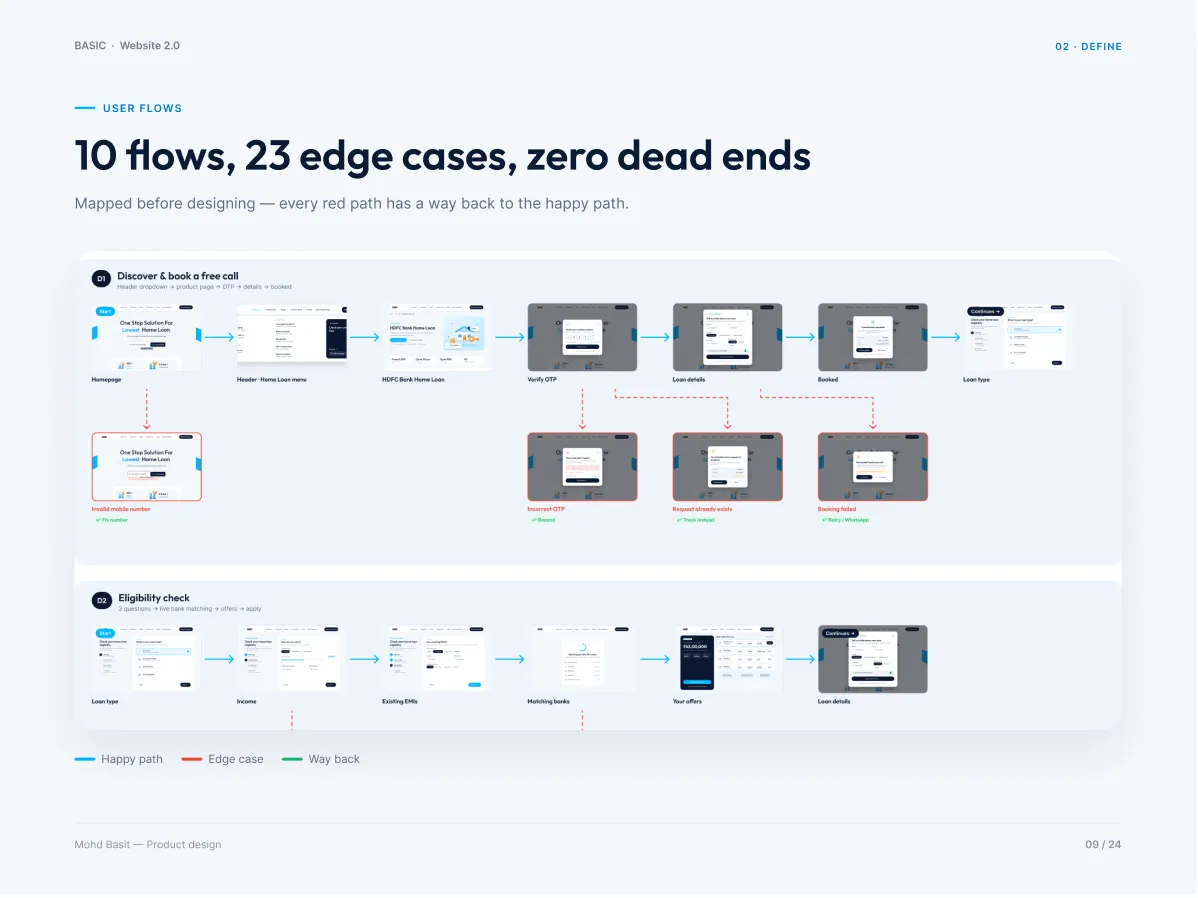
09 User flows
BASIC Website 2.0: User flows
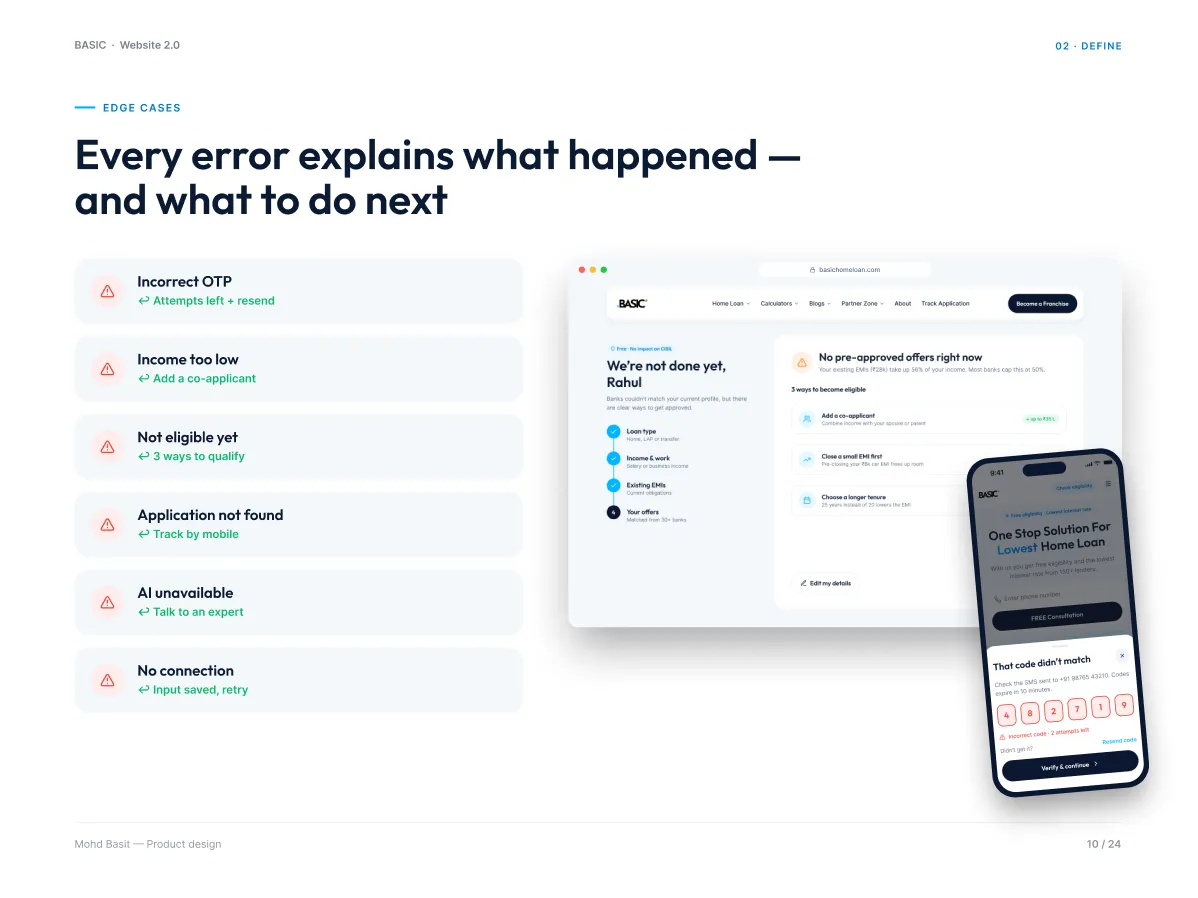
10 Designing for failure
BASIC Website 2.0: Designing for failure
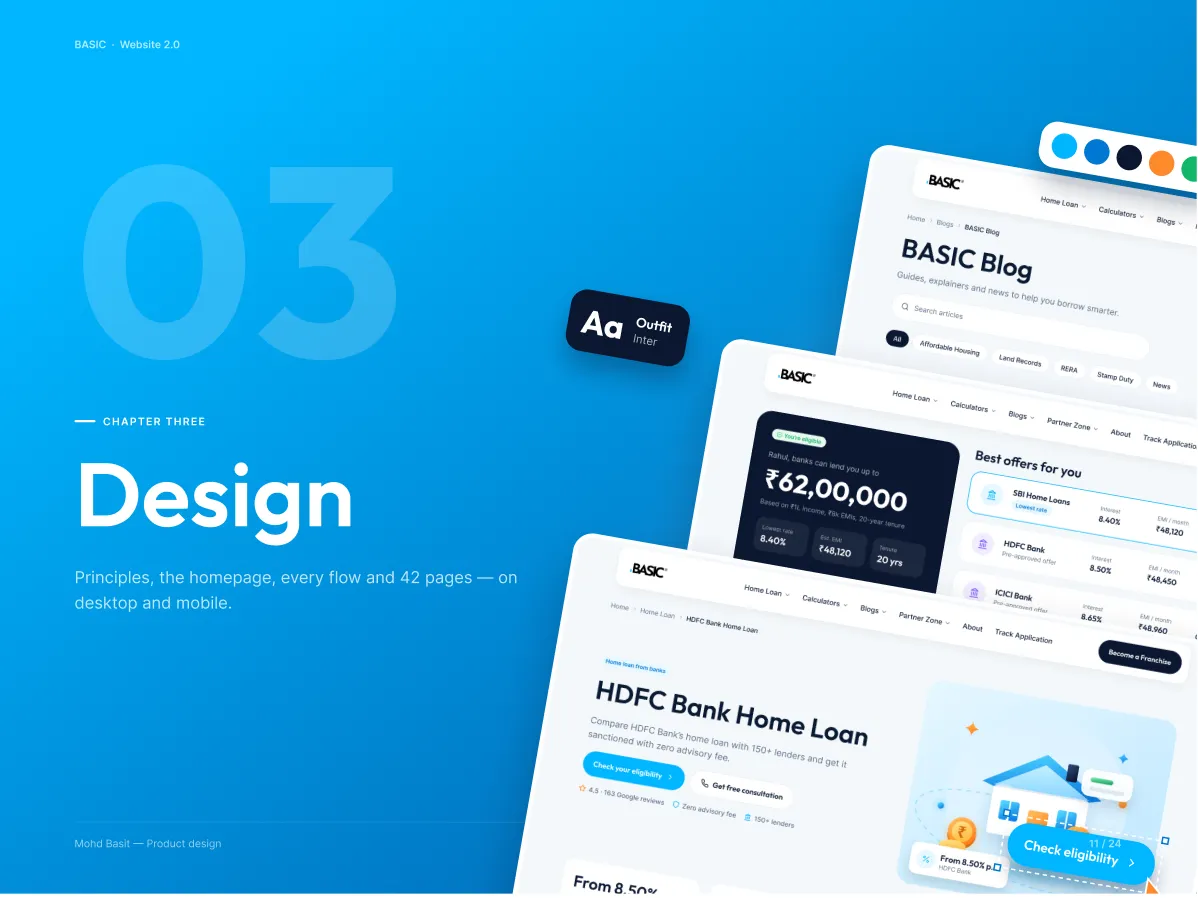
11 Chapter — Design
BASIC Website 2.0: Chapter — Design
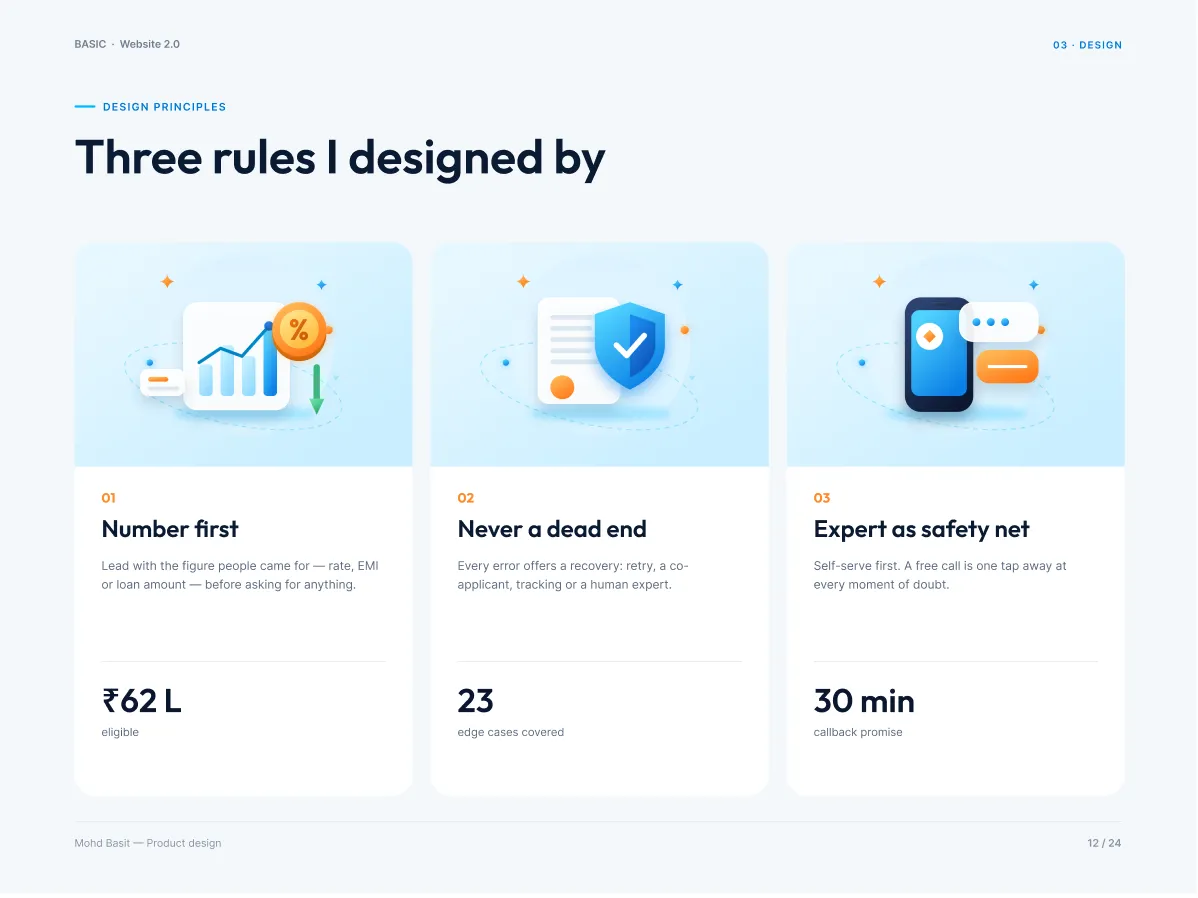
12 Design principles
BASIC Website 2.0: Design principles
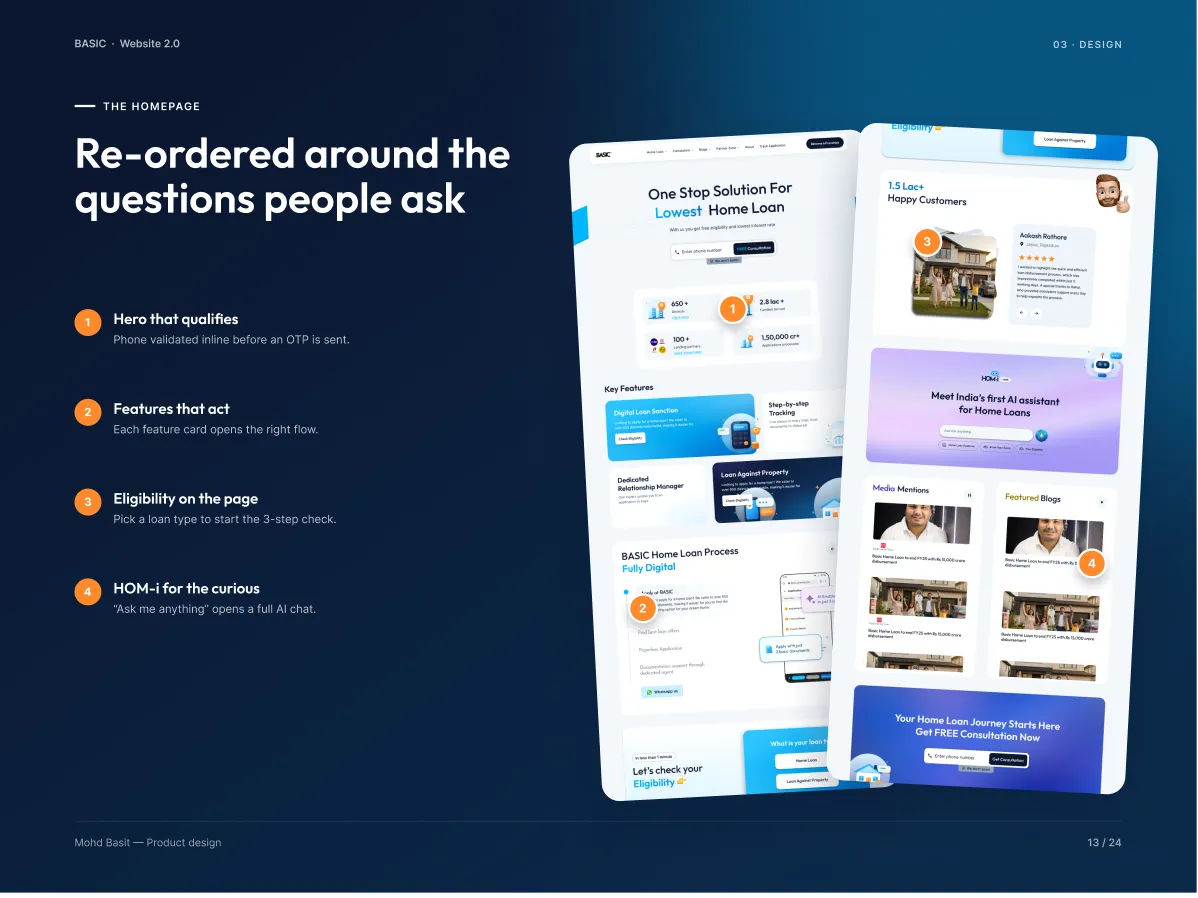
13 The homepage
BASIC Website 2.0: The homepage
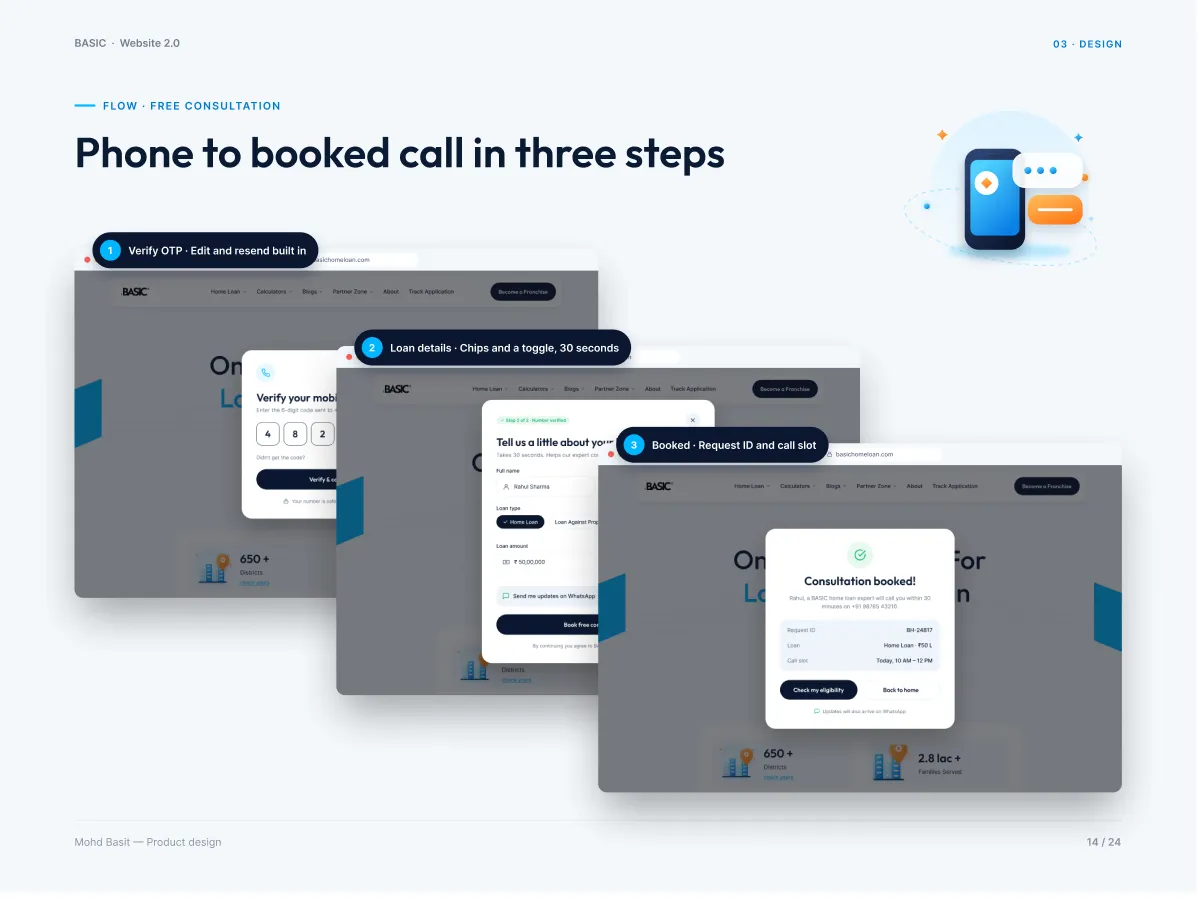
14 Free consultation
BASIC Website 2.0: Free consultation
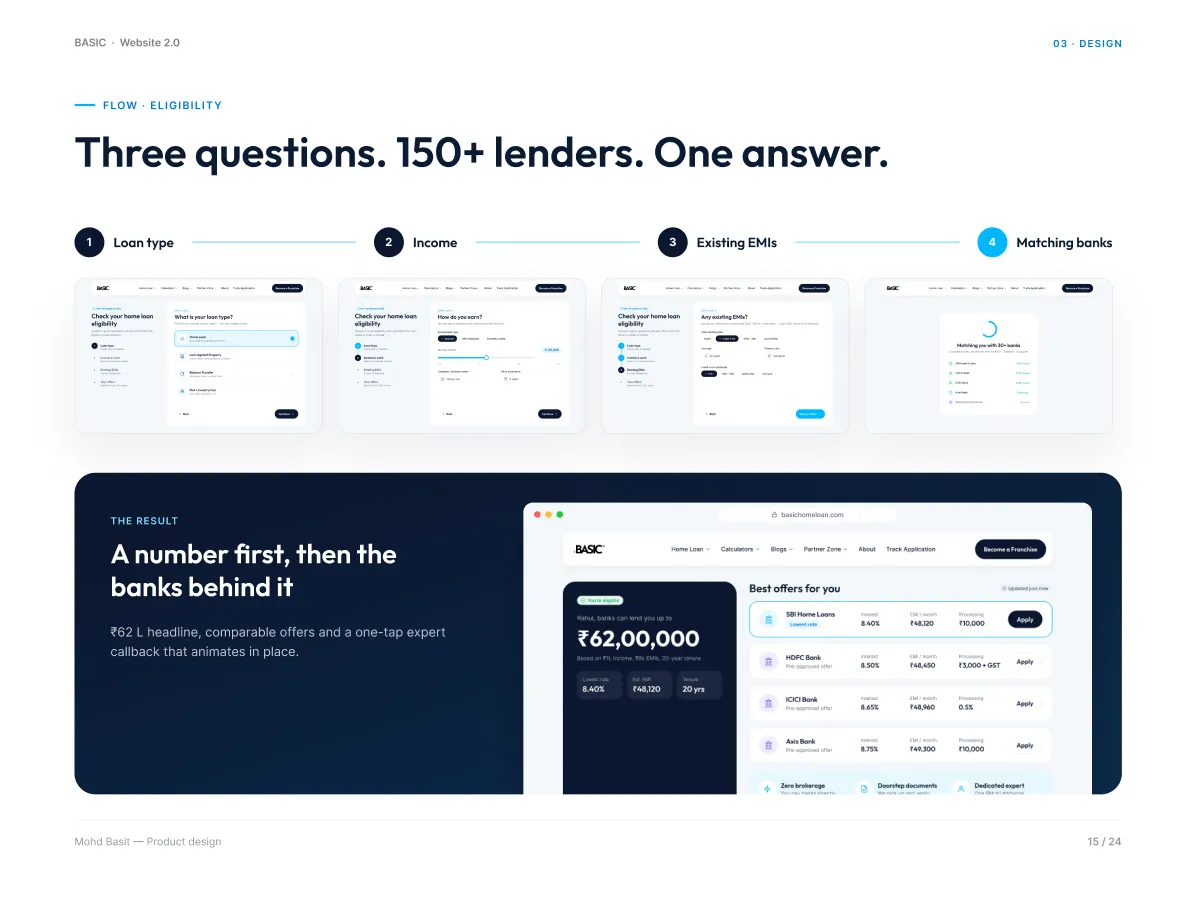
15 Eligibility check
BASIC Website 2.0: Eligibility check
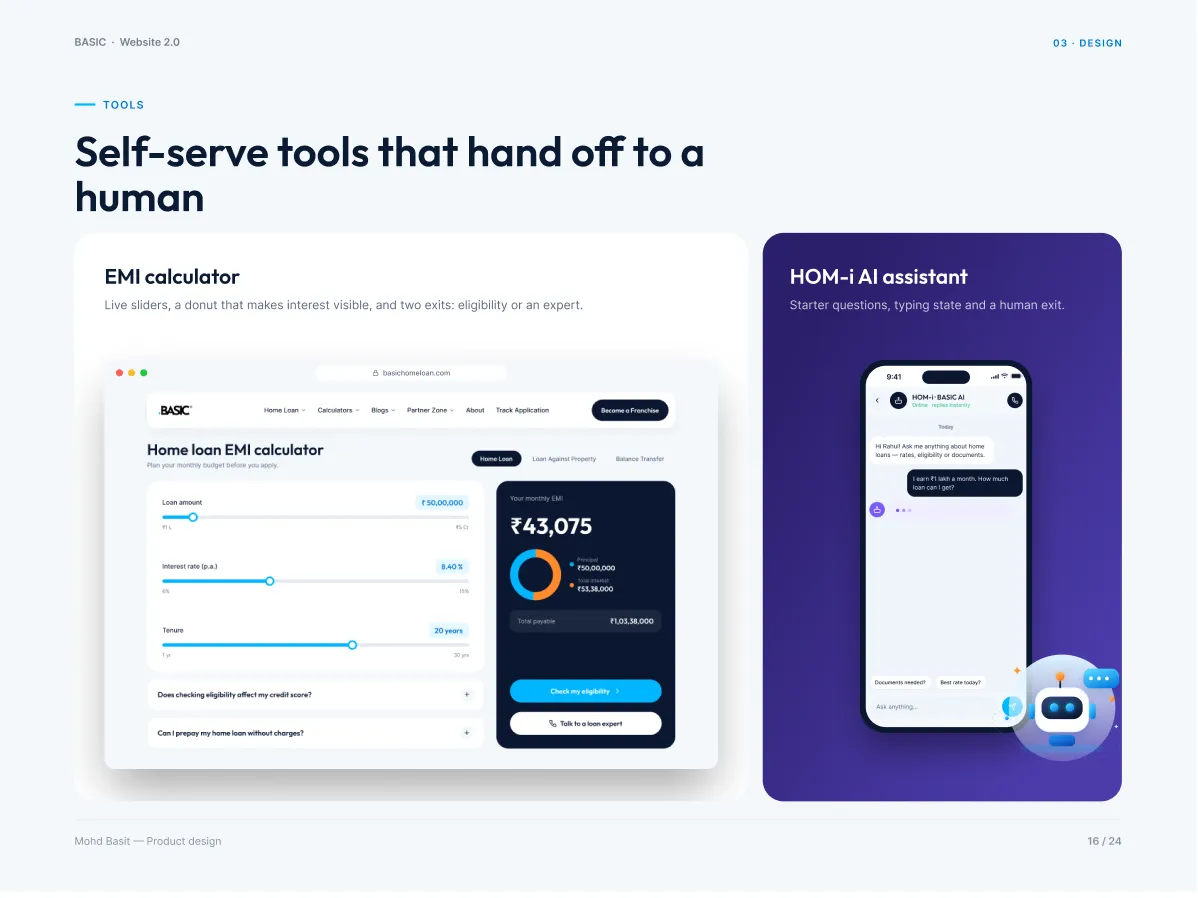
16 EMI & HOM-i
BASIC Website 2.0: EMI & HOM-i
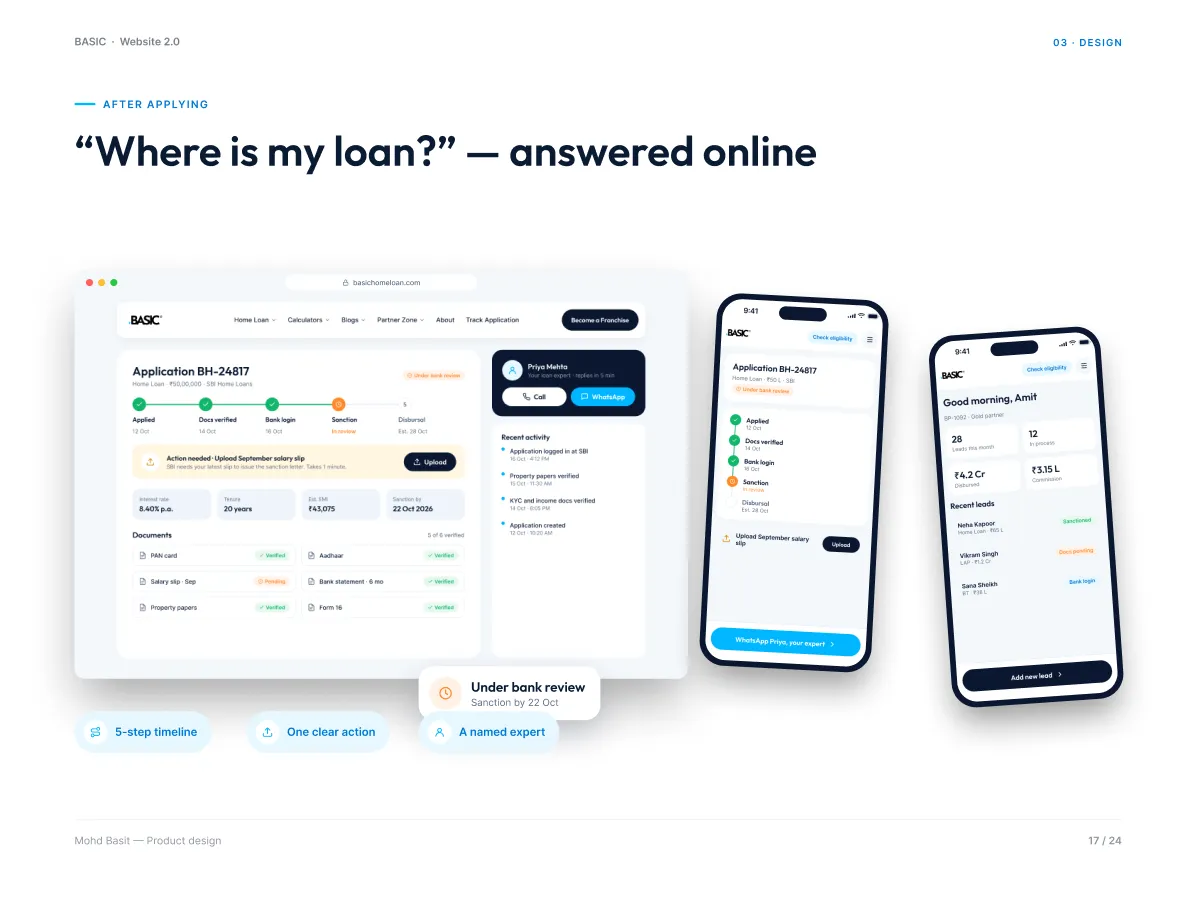
17 Track & Partner Zone
BASIC Website 2.0: Track & Partner Zone
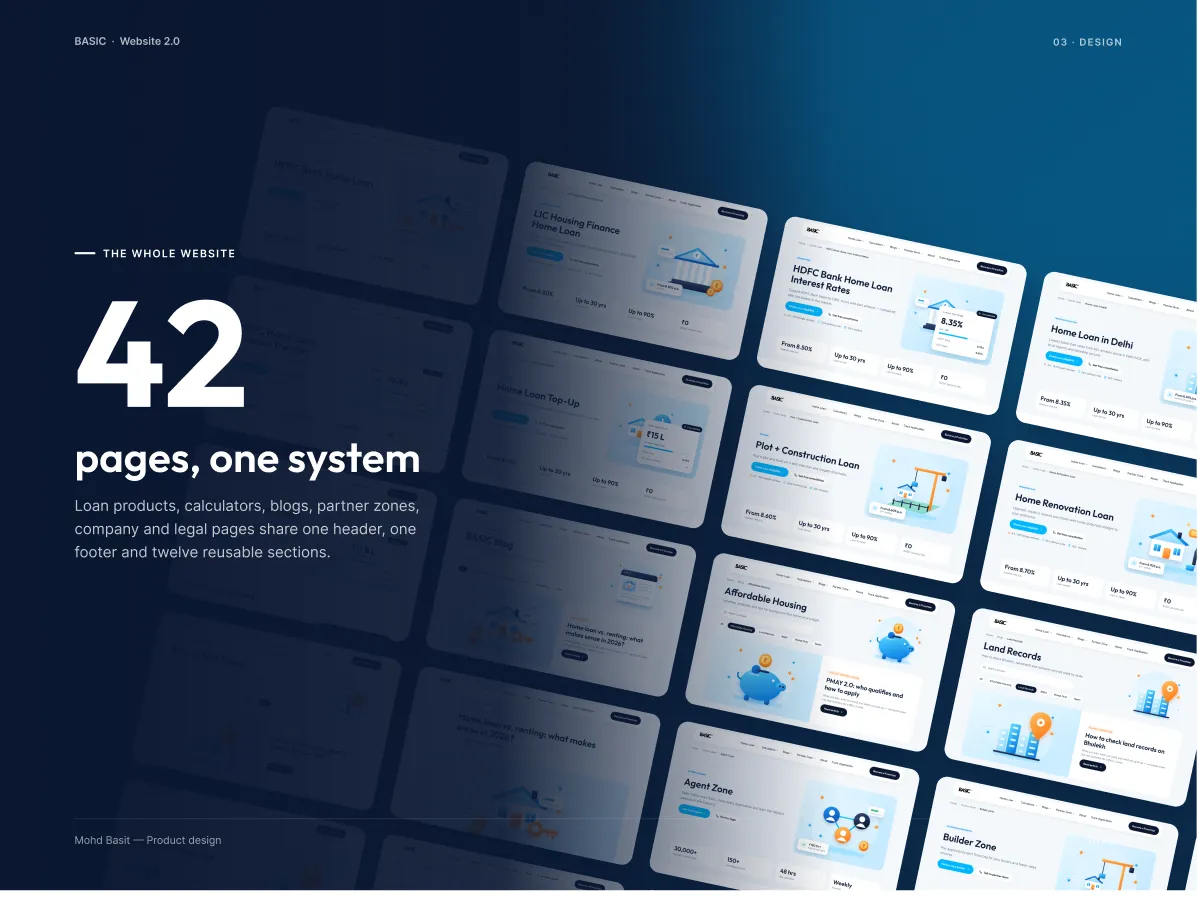
18 42 pages
BASIC Website 2.0: 42 pages
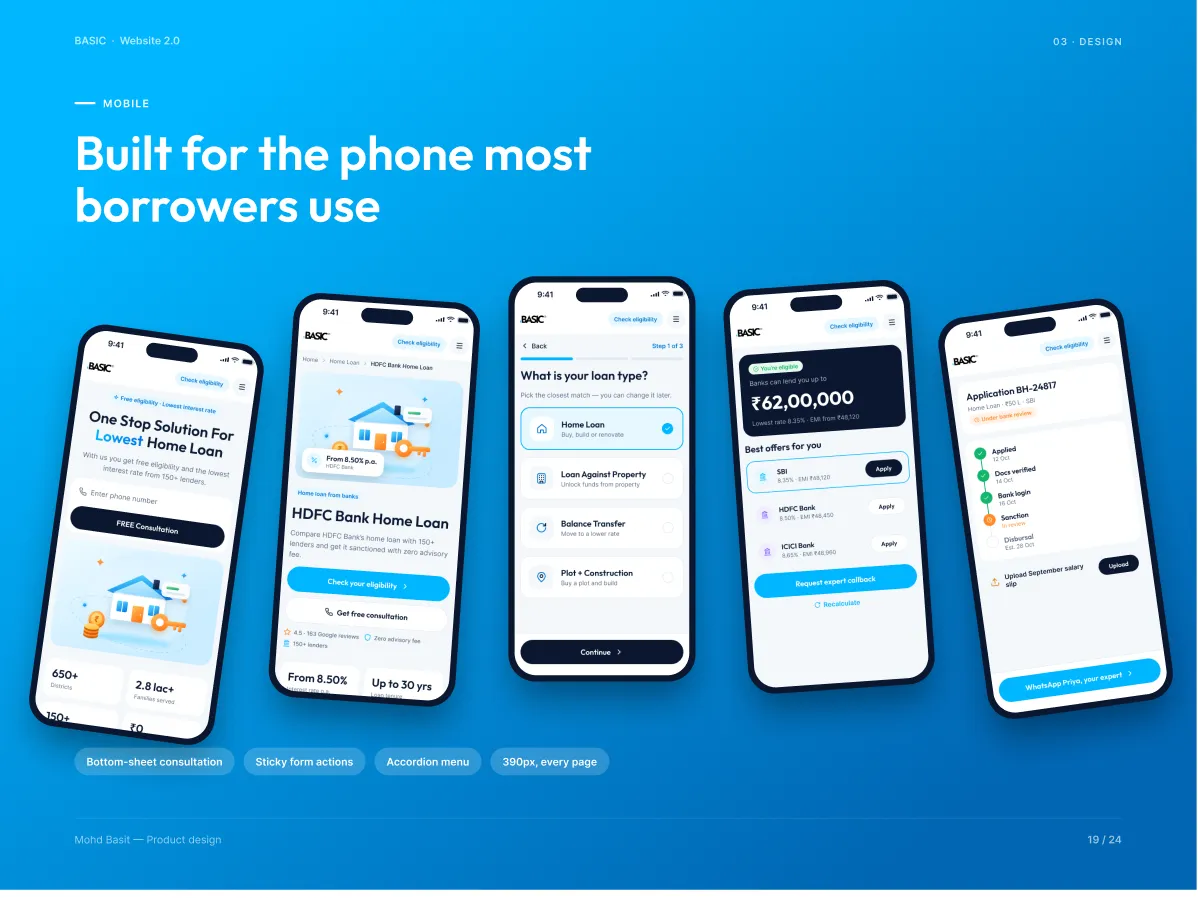
19 Mobile
BASIC Website 2.0: Mobile
20 Edge cases
BASIC Website 2.0: Edge cases
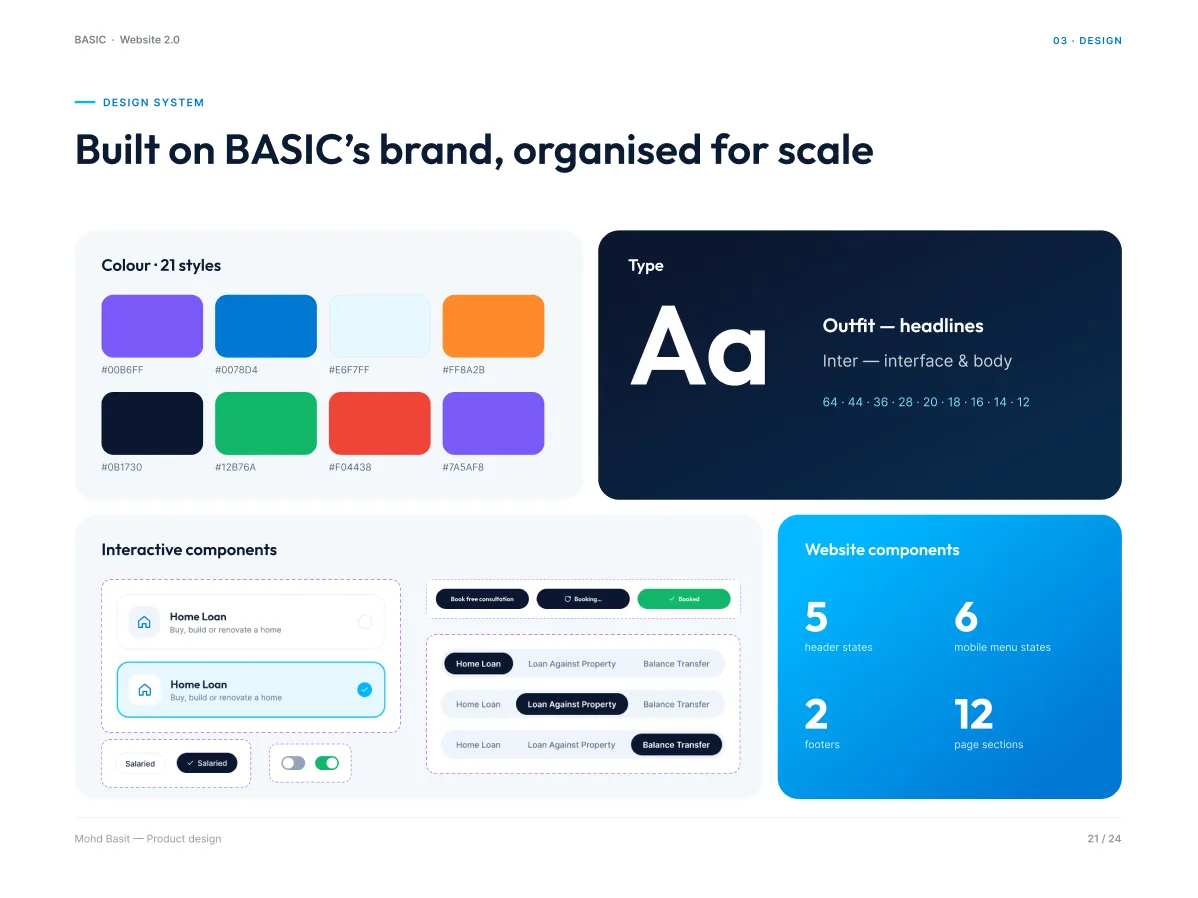
21 Design system
BASIC Website 2.0: Design system
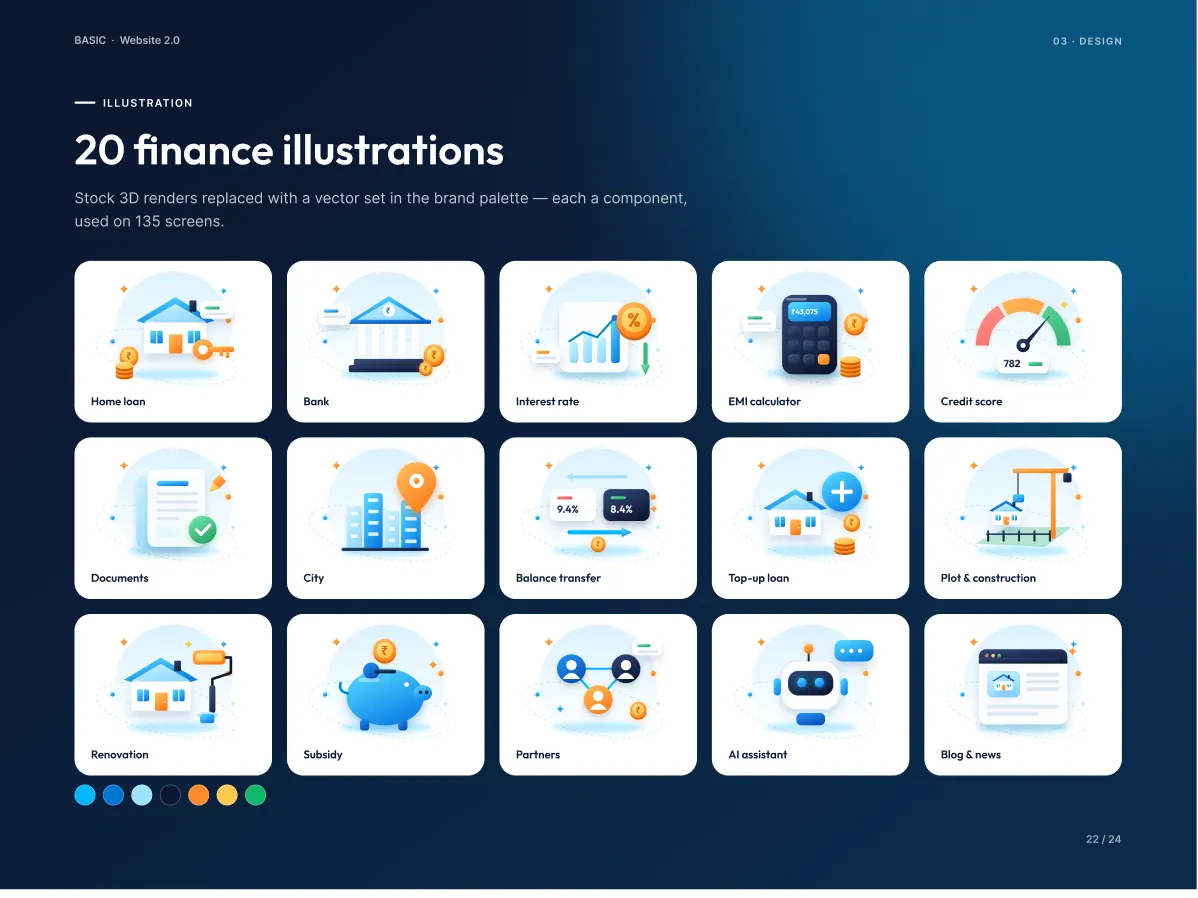
22 Illustration
BASIC Website 2.0: Illustration
23 Prototype
BASIC Website 2.0: Prototype
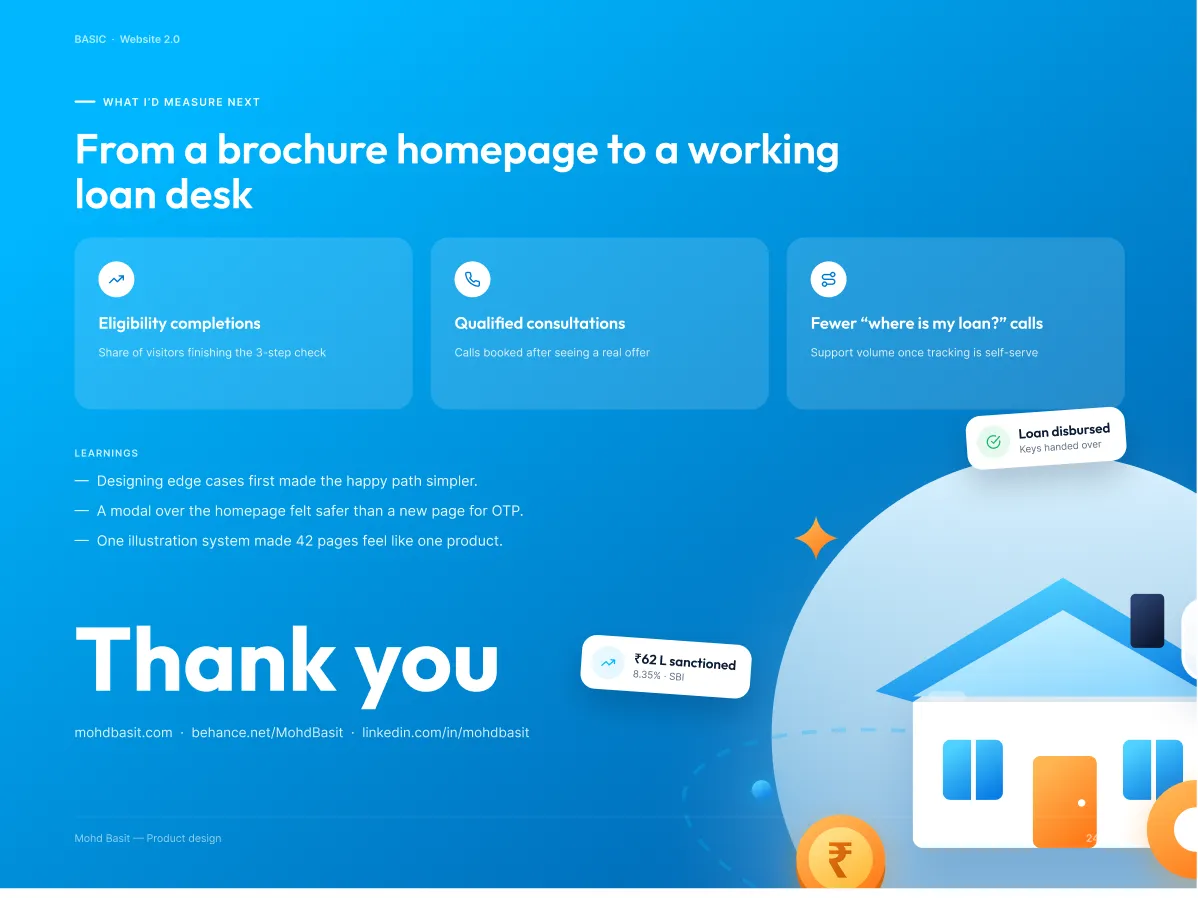
24 Outcome & thanks
BASIC Website 2.0: Outcome & thanks

Next case study

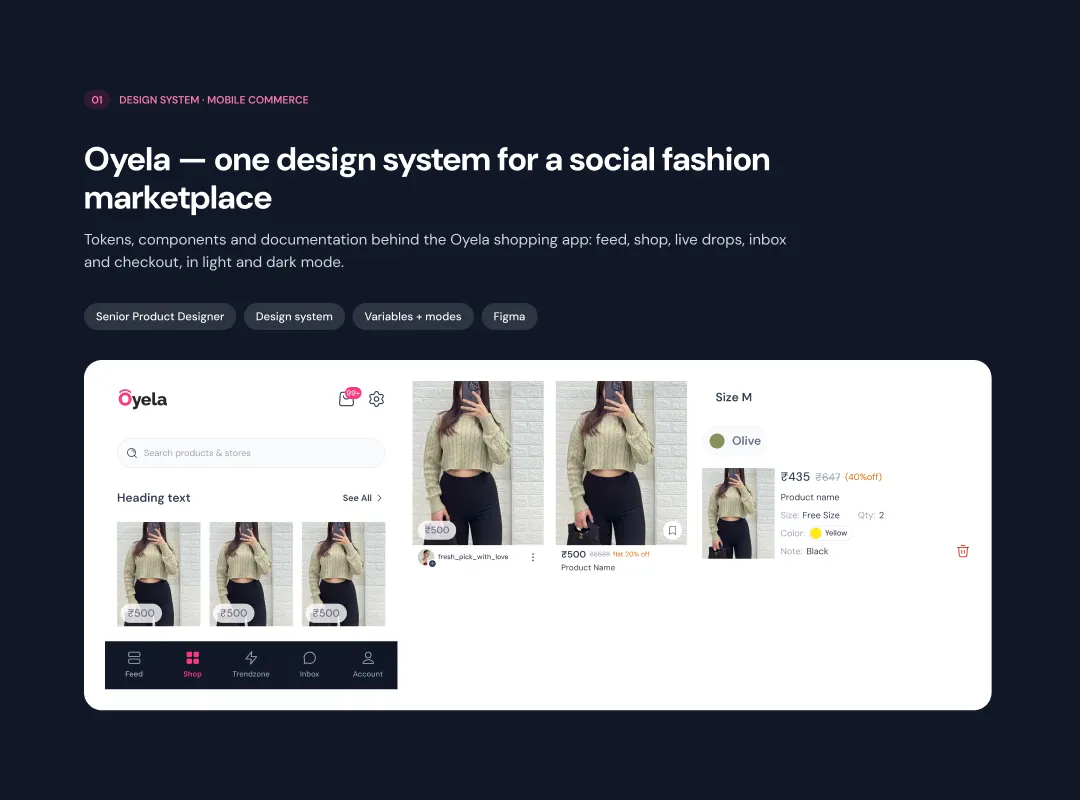
Oyela · Design systems

Master Design System

Oyela — one design system for a social fashion marketplace

Open case study→